
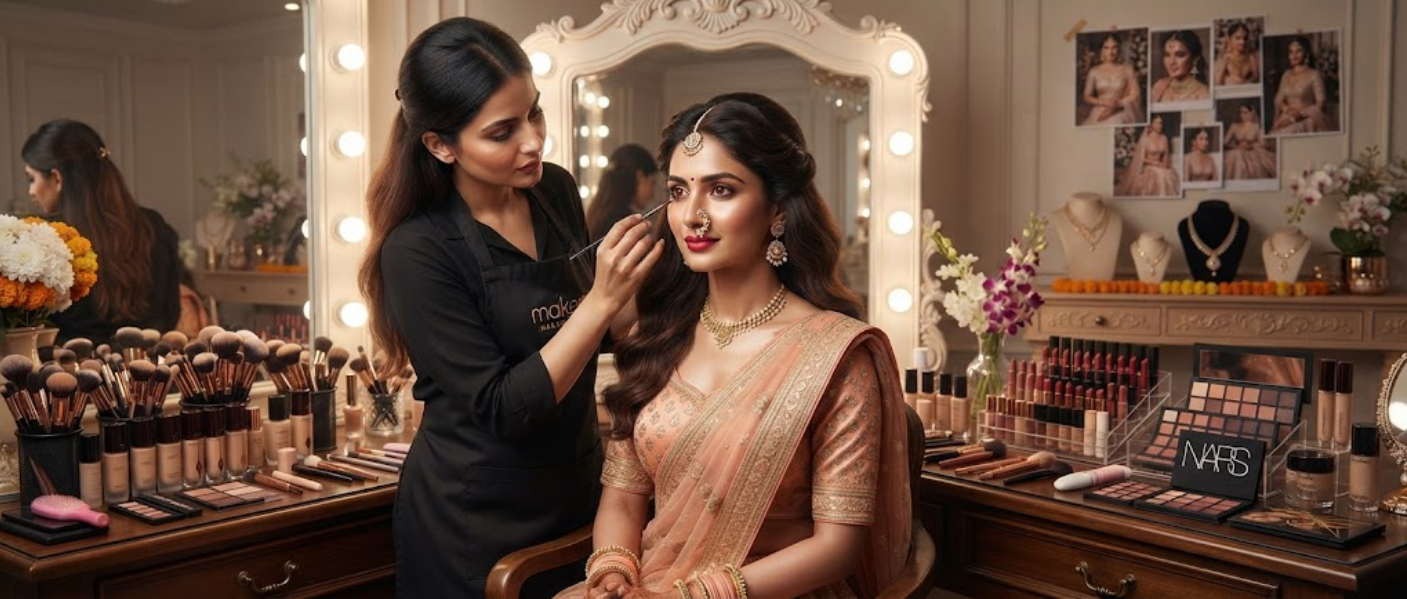
Your wedding day is not the ideal time to discover that your foundation shade doesn’t match your neck, your lipstick feels uncomfortable, your false lashes are too dramatic, or your hairstyle doesn’t work with your outfit. This is exactly why a bridal makeup trial can be one of the most valuable steps in your wedding beauty preparation.
A bridal makeup trial gives you and your makeup artist an opportunity to plan your look before the actual wedding day. It allows you to discuss your preferences, test different makeup styles, evaluate your complexion, experiment with eye makeup and lipstick, and understand how the complete look works with your outfit and jewellery.
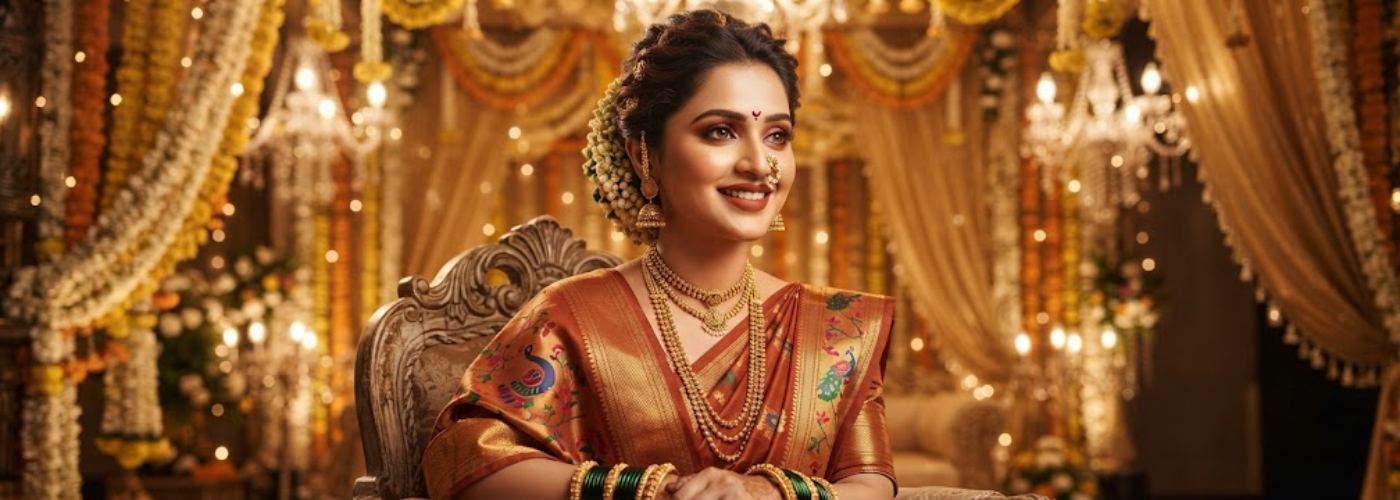
For Indian brides, this can be particularly important because bridal styling often involves detailed jewellery, sarees or lehengas, traditional accessories, hairstyles and different wedding functions. A Maharashtrian bride, for example, may need to coordinate her makeup with a nath, mundavalya, chandrakor, traditional gold jewellery and a Paithani or Nauvari saree.
A trial is also useful for photography. Makeup can appear different under natural daylight, indoor lighting and camera flash. Testing the finished look beforehand gives you a better idea of how your complexion, blush, eyes and lipstick will appear in photographs.
The trial isn’t simply about deciding whether you like a makeup artist’s work. It is about creating a clear beauty plan for your wedding day.
In this guide, we’ll explain what happens during a bridal makeup trial, when to book one, what to bring, what questions to ask, how to prepare your skin, what to photograph and how to decide whether the final bridal look is right for you.
1. What Is a Bridal Makeup Trial?
A bridal makeup trial is a scheduled appointment with your makeup artist before the wedding.
During the appointment, the artist typically discusses your preferred bridal style and creates a version of the planned makeup look.
The trial may include:
- Skin preparation
- Foundation and complexion matching
- Concealer
- Contouring
- Blush
- Highlighter
- Eye makeup
- Eyeliner
- False lashes
- Eyebrow styling
- Lip liner
Depending on your package and makeup artist, the trial may also include hairstyle testing.
The goal is to determine what works before the wedding day.
A good trial should feel like a collaborative process rather than simply having makeup applied without discussion.
2. Why Is a Bridal Makeup Trial Important?
A makeup trial reduces uncertainty.
Instead of imagining how your wedding makeup might look, you can actually see it on your face.
It can help you determine:
- Whether the foundation matches
- Whether the eye makeup suits your eye shape
- Whether the lipstick complements your complexion
- Whether the makeup feels comfortable
- Whether the overall look matches your personality
- Whether the makeup photographs well
It also gives your artist valuable information about your skin.
They can understand how products behave on your complexion and make adjustments before the wedding.
For brides who are unsure between natural, soft-glam or dramatic makeup, a trial can make the decision much easier.
3. When Should You Schedule Your Bridal Makeup Trial?
Ideally, schedule your trial several weeks before your wedding, rather than immediately before it.
This gives you enough time to make changes.
If you need to modify:
- Lipstick colour
- Foundation finish
- Eye makeup
- Eyelashes
- Contouring
- Hairstyle
- Hair accessories
you still have time.
If you’re getting married during a busy wedding season, book your makeup artist early and ask about their preferred trial schedule.
Your exact timing can depend on your wedding date, makeup artist’s availability and whether you need one or multiple trials.
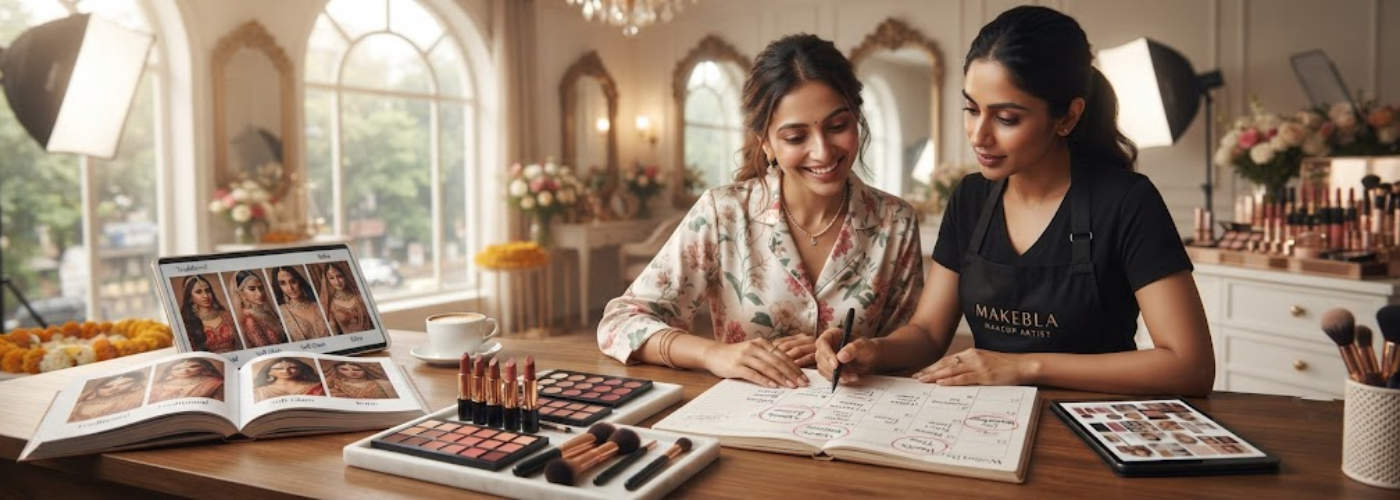
4. Decide What Bridal Look You Want Before the Trial
You don’t need to know every detail before your appointment.
However, having some inspiration can make the consultation easier.
Collect examples of:
- Eye makeup
- Lip colours
- Complexion finishes
- Hairstyles
- Bridal outfits
- Jewellery
- Traditional makeup
You can save photographs from bridal magazines, social media or makeup portfolios.
But remember that inspiration photographs should be treated as references rather than exact instructions.
Your skin tone, facial features and eye shape may differ from the model in the photograph.
5. Bring Your Wedding Outfit Information
Your makeup should complement your outfit.
You don’t necessarily need to bring the actual wedding outfit to the trial, but photographs, fabric samples or detailed descriptions can help.
Share:
- Saree or lehenga colour
- Embroidery
- Dupatta colour
- Blouse design
- Jewellery
- Wedding theme
For example, makeup for a red Paithani saree may be very different from makeup designed for a pastel reception lehenga.
Your makeup artist can use these details to create a more coordinated look.
6. Bring Your Jewellery and Accessories
Jewellery can change the balance of your bridal appearance.
If possible, bring photographs or samples of your:
- Necklace
- Earrings
- Nath
- Maang tikka
- Mundavalya
This is especially useful for traditional bridal styling.
For Maharashtrian brides, accessories such as the nath, mundavalya and chandrakor can strongly influence how the makeup looks around the face.
Your makeup should complement your jewellery—not compete with it.
7. Prepare Your Skin Before the Trial
You don’t need to completely change your skincare routine before a makeup trial.
In fact, avoid experimenting with new strong skincare products immediately before the appointment.
Instead:
- Keep your skin clean
- Stay consistent with your normal routine
- Hydrate appropriately
- Avoid unnecessary irritation
- Arrive with a clean face unless your artist advises otherwise
Your makeup artist needs to see how your skin behaves naturally.
If you have very dry, oily or combination skin, mention it during the consultation.
This can help the artist select an appropriate makeup preparation routine.
8. Discuss Your Skin Type and Makeup Preferences
Tell your makeup artist honestly about your skin and preferences.
Discuss whether you prefer:
- Natural makeup
- Soft glam
- Full glam
- Matte finish
- Satin finish
- Luminous finish
- Light coverage
Also mention whether you normally wear makeup.
If you’re not accustomed to heavy makeup, communicate that clearly.
The goal is to create a bridal look that makes you feel beautiful without making you feel uncomfortable.
9. Test Your Foundation Properly
Foundation is one of the most important parts of bridal makeup.
The correct shade should blend naturally with your complexion.
Your makeup artist should consider:
- Face
- Neck
- Visible chest area
- Skin undertone
- Wedding lighting
- Photography
Don’t judge foundation only under bright studio lights.
Look at it in natural light when possible.
Take photographs from different angles.
The goal is a complexion that looks even, natural and polished both in person and in photographs.
10. Test Your Eye Makeup and Lashes
Eye makeup can dramatically change your bridal appearance.
During the trial, test details such as:
- Eyeshadow colour
- Eyeliner thickness
- Eyeliner shape
- Kajal
- False lashes
- Lash volume
- Inner-corner highlight
Your eye shape should influence the final design.
For example, the same eyeliner style may look very different on almond, round, hooded or deep-set eyes.
Don’t be afraid to tell your artist if lashes feel too heavy.
Comfort matters.
11. Test Different Lipstick Shades
Your lipstick should complement your complexion and entire bridal look.
During your trial, you can compare shades such as:
- Classic red
- Rose
- Pink
- Nude
- Terracotta
- Brick
- Berry
- Wine
Don’t choose a lipstick simply because it looks beautiful in a photograph.
Check whether it feels comfortable.
You should also photograph the colours.
Some shades can appear different under flash photography.
12. Take Photos During the Trial
Photography is one of the most useful parts of a bridal makeup trial.
Take photographs:
- In daylight
- Indoors
- With flash
- From the front
- From both sides
- From a slight distance
Look at the photos later rather than making an immediate decision.
Check:
- Foundation
- Contour
- Blush
- Eye makeup
- Lipstick
- Highlight
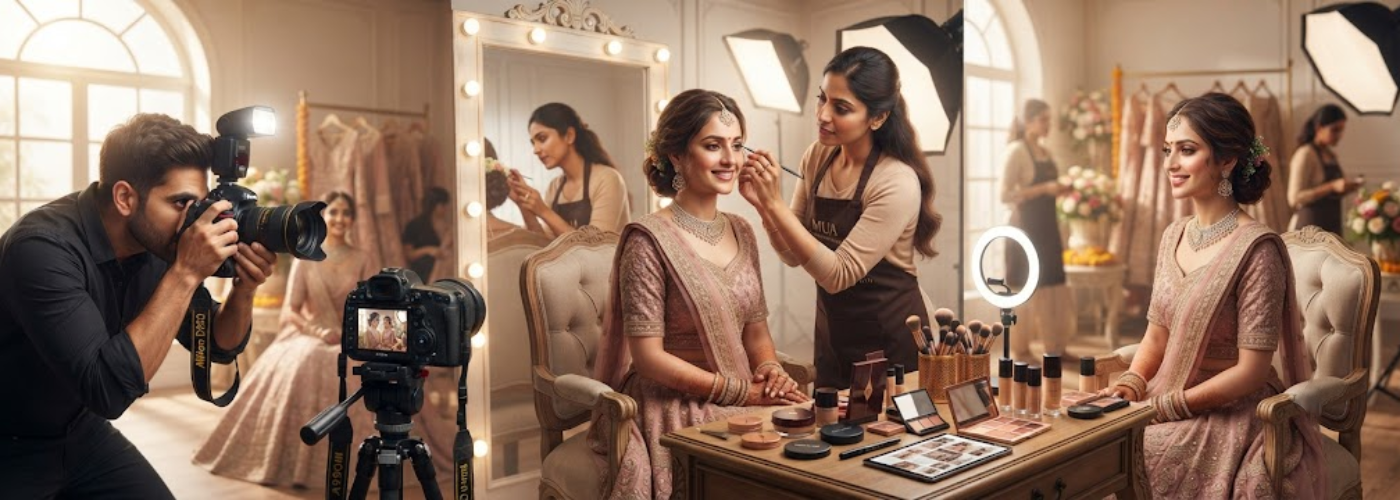
13. Consider Your Wedding Photography and Lighting
Your wedding makeup needs to work in the environment where your photographs will be taken.
A daytime outdoor wedding may require different makeup considerations from an evening reception with chandeliers and stage lights.
Discuss:
- Wedding venue
- Ceremony timing
- Indoor or outdoor location
- Photography style
- Flash photography
- Video coverage
This information helps your makeup artist plan the finish appropriately.
14. Don't Be Afraid to Request Changes
The purpose of a trial is to identify what works and what doesn’t.
If something feels wrong, say so politely.
You can request changes such as:
- Less foundation
- More or less contour
- Softer eyes
- Stronger eyeliner
- Different lashes
- Different lipstick
- More natural brows
Your makeup artist should understand that the final look needs to suit you.
15. Finalise Your Bridal Makeup Look
After testing the important elements, decide on your final look.
Make a note of:
- Foundation finish
- Coverage
- Contour
- Blush
- Highlighter
- Eyeshadow
- Eyeliner
Final Thoughts
A bridal makeup trial isn’t simply a preview of your wedding makeup.
It is a planning session that allows you to make important decisions before your wedding day.
Your wedding morning can already be busy with dressing, jewellery, photography, family members, rituals and the overall excitement of the day.
Having your makeup look decided in advance can remove one major source of uncertainty.
Start by collecting a few makeup references.
Think about the type of bride you want to look like.
Do you prefer natural beauty?
Soft glam?
Traditional Maharashtrian bridal makeup?
A dramatic smoky eye?
A bold red lip?
A luminous complexion?
There isn’t one correct answer.
Your makeup should reflect your personality while complementing your outfit and jewellery.
During the trial, pay attention to your complexion.
Your foundation should blend naturally with your neck.
Your contour should create dimension without appearing harsh.
Your blush should bring freshness to the face.
Your highlighter should add luminosity without excessive shine.
Your eye makeup should enhance your natural eye shape.
Your lashes should look beautiful without becoming uncomfortable.
And your lipstick should complement both your complexion and your outfit.
Photography deserves special attention.
Take photographs under different lighting conditions and from multiple angles.
Remember that your wedding photographer may use flash, video lights or other artificial lighting.
A makeup look that seems perfect in a mirror should also translate well to photographs.
For Maharashtrian brides, consider the complete traditional styling.
Your nath, mundavalya, chandrakor, gold jewellery, saree and hairstyle all frame your face.
The makeup should work with these elements rather than compete with them.
Don’t hesitate to communicate during your trial.
If you want less contour, say so.
If the lashes feel too heavy, mention it.
If the lipstick isn’t your colour, try another shade.
A trial is precisely the right time to make adjustments.
Finally, remember that your wedding makeup should still look like you.
Trends can provide inspiration, but your comfort and confidence matter more.
When you look back at your wedding photographs years later, you should recognise yourself and remember feeling beautiful, confident and comfortable.
- Natural daylight
- Warm indoor lights
- Stage lights
- Flash photography
- Evening venue lighting