
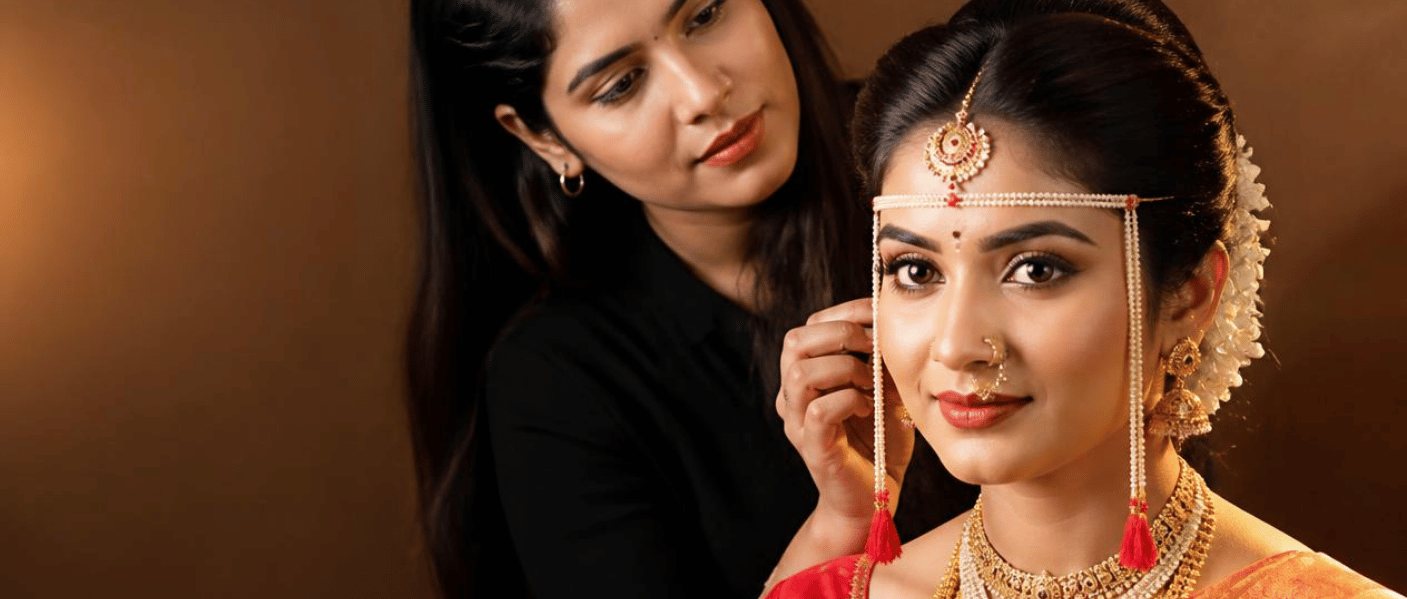
Every bride has her own unique beauty, and there is no single bridal makeup style that works exactly the same way for everyone. Your skin tone, facial features, eye shape, personal style, hairstyle, jewellery and outfit all influence how your final bridal look comes together. One factor that can also help guide your makeup choices is your face shape.
Understanding your face shape can help you and your makeup artist decide where to place contour, blush and highlighter, how to shape the brows, how intense the eye makeup should be and which overall makeup style creates the balance you prefer. Whether you have an oval, round, square, heart, oblong, diamond or combination face shape, the goal is not to hide your natural features. Instead, bridal makeup should enhance your proportions and bring attention to the features you love most.
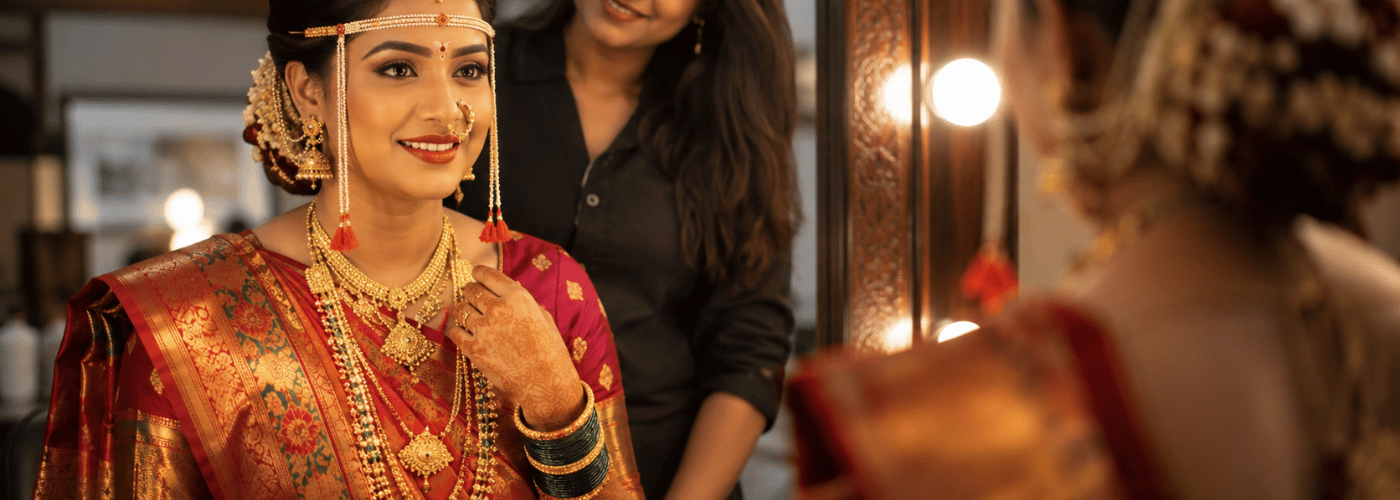
This becomes especially important for Indian brides because bridal makeup is often combined with elaborate jewellery, sarees or lehengas, hair accessories and traditional elements. For a Maharashtrian bride, accessories such as the nath, mundavalya, chandrakor and traditional gold jewellery naturally frame the face. The makeup needs to work harmoniously with these elements.
Your face shape should therefore be viewed as a guideline rather than a strict rule. A skilled makeup artist can adapt techniques according to your individual features instead of following a fixed formula.
In this guide, we’ll explain the most common face shapes, how bridal makeup can be adapted for each one, where to place contour and blush, which eye and lip styles can complement different proportions, and how to choose a bridal look that feels naturally beautiful and camera-ready.
1. Why Face Shape Matters in Bridal Makeup
Face shape provides a useful starting point for understanding facial proportions.
Professional makeup artists can use contour, blush and highlight to create dimension and balance.
For example:
- Round faces may benefit from strategic vertical definition.
- Square faces can be softened with blended contour.
- Long faces can be visually balanced with horizontal placement of blush.
- Heart-shaped faces can be balanced around the forehead and chin.
- Oval faces generally offer versatile styling options.
However, bridal makeup should never be reduced to simply following a face-shape chart.
Two brides may have the same general face shape but completely different:
- Cheekbones
- Jawlines
- Foreheads
- Eye shapes
- Nose structures
- Lip shapes
Therefore, your artist should assess your actual features rather than relying solely on a category.
2. How to Identify Your Face Shape
Before choosing a makeup strategy, you need to understand your general face shape.
Look at yourself from the front with your hair pulled away from your face.
Consider:
- Forehead width
- Cheekbone width
- Jawline width
- Face length
- Chin shape
- Lip shapes
The most common categories are:
- Oval
- Round
- Square
- Heart
- Oblong
- Diamond
Some people may have a combination of characteristics.
Don’t worry if your face doesn’t fit perfectly into one category.
Real faces are naturally varied.
3. Bridal Makeup for an Oval Face Shape
An oval face is generally characterised by a slightly longer face with balanced forehead, cheekbone and jaw proportions.
Because the proportions are relatively balanced, oval faces can work beautifully with many bridal makeup styles.
You can experiment with:
- Soft glam
- Traditional bridal makeup
- Natural makeup
- Smoky eyes
- Defined eyeliner
- Bold lips
- Luminous complexion
Contour should generally remain subtle.
Instead of heavily sculpting the entire face, your makeup artist can enhance your natural cheekbones.
Blush can be blended toward the upper cheek area for a lifted appearance.
4. Bridal Makeup for a Round Face Shape
Round faces typically have softer angles, fuller cheeks and similar width and length proportions.
The goal isn’t to make a round face appear dramatically thinner.
Instead, strategic makeup can add dimension.
Your artist may use contour along areas such as:
- Sides of the forehead
- Under the cheekbones
- Along the jawline
Blush can be placed slightly higher on the cheeks and blended upward.
Avoid creating a harsh horizontal stripe of contour.
The transition should remain seamless.
For eye makeup, elongated eyeliner or softly lifted outer-corner eyeshadow can complement the overall balance.
5. Bridal Makeup for a Square Face Shape
Square faces often have a defined jawline and forehead with relatively similar width.
Many brides with square faces have naturally striking bone structure.
Instead of trying to remove that definition, makeup can soften transitions.
Your makeup artist may blend contour around:
- Jaw corners
- Temples
- Hairline
Blush can be softly diffused over the cheeks.
A luminous centre of the face can help bring attention toward the eyes and central features.
Soft eye makeup and rounded transitions can complement strong facial angles beautifully.
6. Bridal Makeup for a Heart-Shaped Face
A heart-shaped face often has a wider forehead, prominent cheekbones and a narrower chin.
The objective is to create visual balance between the upper and lower parts of the face.
Your artist may use gentle contour near the temples and upper forehead.
Blush can be blended naturally across the cheek area.
Avoid excessive highlighting of the centre of the chin if you already have a naturally prominent or narrow chin.
For the eyes, softly defined outer corners can create an elegant bridal effect.
Lip colour can also help bring visual balance to the lower half of the face.
7. Bridal Makeup for an Oblong or Long Face Shape
An oblong face is generally longer than it is wide.
The makeup goal can be to create a visually balanced appearance without making the face look overly elongated.
Your artist may use:
- Soft contour near the upper forehead
- Gentle contour around the lower chin
- Blush placed more horizontally
- Soft cheek definition
Avoid extending blush too far upward toward the temples if the goal is to visually balance face length.
Eye makeup can be slightly wider and more horizontal.
Hairstyle also becomes important.
A side part, textured hairstyle or traditional bun with appropriate accessories can influence the overall proportions.
8. Bridal Makeup for a Diamond Face Shape
Diamond-shaped faces often feature prominent cheekbones with a narrower forehead and jawline.
Because the cheekbones naturally attract attention, makeup should enhance rather than overwhelm them.
Your artist may use very subtle contour.
Blush can be placed carefully around the cheek area.
Highlighter can be applied strategically rather than heavily.
For eye makeup, balanced definition can bring attention toward the eyes.
A well-defined lip can also complement prominent cheekbones.
9. Contouring According to Face Shape
Contouring creates the illusion of depth and dimension.
But bridal contour should usually be blended carefully.
Too much contour can become obvious in person and photographs.
Different face shapes may require different placement.
Oval
Use subtle cheek and temple definition.
Round
Focus on adding gentle vertical dimension around the sides of the face.
Square
Soften the corners of the jaw and temples.
Heart
Balance the forehead while keeping the chin natural.
Oblong
Use subtle forehead and chin definition.
Diamond
Keep cheek contour minimal and focus on balanced definition.
The goal is not to completely change your face.
It is to enhance its natural structure.
10. Blush Placement for Different Face Shapes
Blush adds freshness and dimension to bridal makeup.
Where you place it can influence the visual balance of your face.
For example:
Round face: Blend slightly upward.
Square face: Use soft rounded blending.
Oblong face: Consider a more horizontal placement.
Heart-shaped face: Blend naturally across the cheek area.
Oval face: Keep placement balanced and natural.
Diamond face: Avoid overemphasising already prominent cheekbones.
The best blush placement should also consider your natural cheek structure.
11. Eye Makeup According to Facial Proportions
Eye makeup can dramatically influence the overall bridal look.
However, face shape should not be the only consideration.
Your artist should also assess your:
- Eye shape
- Eye size
- Brow structure
- Eyelid space
- Lash line
For example, elongated eyeliner can create a lifted effect, while softly rounded eyeshadow can create a more open appearance.
Brides who prefer traditional Maharashtrian makeup may choose defined kajal and classic eyeliner.
Others may prefer soft brown smoky eyes.
Your makeup artist can customise the technique.
12. Lip Makeup and Face Balance
Lip makeup can help complete your bridal appearance.
You can choose:
- Classic red
- Deep red
- Rose
- Pink
- Mauve
- Berry
- Terracotta
- Nude
The ideal shade depends more on your complexion, outfit and personal preference than face shape alone.
However, a defined lip can help create balance when the eye makeup and cheek makeup are strong.
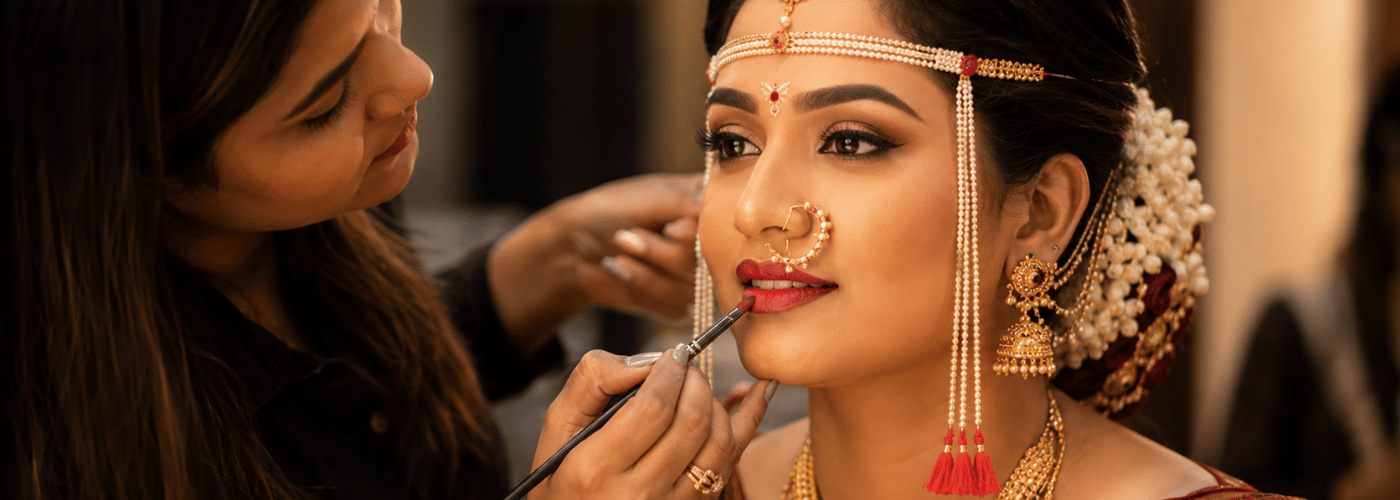
For traditional Maharashtrian bridal looks, classic reds, deep reds, pinks and warm tones can work beautifully with traditional jewellery and sarees.
13. Don't Forget Your Hairstyle and Jewellery
Makeup doesn’t exist separately from bridal styling.
Your hairstyle can change how your face appears.
Jewellery can also frame your facial proportions.
For example:
- Earrings add visual length.
- A maang tikka draws attention toward the centre.
- A nath adds definition around the cheek and nose area.
- Mundavalya creates vertical framing around the face.
- A bun can create height.
- A side-parted hairstyle can change the visual balance.
This is why your makeup artist should ideally know your final hairstyle and jewellery choices.
14. Face Shape and Bridal Photography
Wedding photography can make makeup appear different from how it looks in a mirror.
Professional photographers may use:
- Flash
- Softboxes
- Natural daylight
- Backlighting
- Direct lighting
- Low-light photography
Your contour, highlight and blush should therefore be blended carefully.
A professional makeup artist should understand how makeup translates to photographs.
During your makeup trial, take photographs from different angles.
Look at your face in:
- Direct photographs
- Side profiles
- Close-ups
- Full-length portraits
15. Choose Makeup That Makes You Feel Like Yourself
Face shape can provide useful guidance, but it should never dictate your entire bridal appearance.
If you love bold red lipstick, wear it.
If you prefer minimal makeup, choose a natural look.
If you want dramatic smoky eyes, discuss them with your artist.
If you love traditional Maharashtrian makeup, embrace it.
Your wedding day is personal.
The most flattering makeup is ultimately the makeup that makes you feel confident.
A skilled makeup artist will adapt techniques to your actual face instead of trying to force your features into a trend.
Common Bridal Makeup Mistakes Related to Face Shape
Over-Contouring
More contour doesn’t automatically mean better definition.
Following Face Charts Too Literally
Every face is different.
Ignoring Eye Shape
Face shape alone doesn’t determine the best eye makeup.
Forgetting Hairstyle
Hair dramatically affects facial framing.
Ignoring Jewellery
Traditional jewellery can change the visual balance around the face.
Using Too Much Highlighter
Excessive shine may appear harsh under photography.
Choosing Makeup Based Only on Trends
A trend may not suit your preferences.
Trying to Change Your Face Completely
Bridal makeup should enhance rather than disguise.
Forgetting the Neck
Foundation and complexion makeup should transition naturally.
Skipping the Makeup Trial
The trial is the best opportunity to test your final look.
Final Thoughts
Understanding your face shape can be a useful part of bridal makeup planning, but it should never become a strict set of rules. Your face is unique, and even if you have an oval face, your eye shape, cheekbones, nose, lips, forehead and jawline will be different from another bride with the same face shape. That is why personalised makeup matters when creating a bridal look that feels natural and flattering.
If you have a round face, you may benefit from softly lifted blush placement and carefully blended contouring. For a square face, your naturally defined jawline can be softened with seamless contouring. If you have a heart-shaped face, makeup can help create visual balance between the forehead and chin, while strategic blush and contour can help balance an oblong face. Brides with prominent diamond-shaped cheekbones can use subtle makeup techniques to enhance their natural structure beautifully. If you have an oval face, you have considerable flexibility when choosing different bridal makeup styles.
However, face shape is only one part of the equation. Your eye shape, skin type, skin tone, outfit, jewellery, hairstyle and photography environment also play an important role in determining how your bridal makeup should be designed. For Indian brides, the relationship between makeup and traditional styling can be particularly important because jewellery, hairstyles and bridal accessories naturally frame the face.
For a Maharashtrian bride, the complete look may include a Paithani or Nauvari saree, nath, mundavalya, chandrakor, traditional gold jewellery and a specific bridal hairstyle. These details should be considered when designing the makeup so that every element works together harmoniously. Your makeup should enhance the traditional styling without overpowering the saree, jewellery or other important bridal details.
Your bridal makeup trial is the perfect time to test this complete combination. Try your foundation, test your contour, experiment with blush placement, compare lipstick shades and check your eye makeup. Where possible, add your jewellery and hairstyle accessories during the trial and take photographs under different lighting conditions. This will give you a much clearer idea of how the complete bridal look will appear in photographs.
Most importantly, communicate openly with your makeup artist. If you want more definition, say so. If you prefer softer makeup, mention it. If you don’t feel comfortable with heavy contour, dramatic lashes or a particular makeup technique, your artist should know. Good communication during the trial allows your makeup artist to understand your preferences and make the necessary adjustments before your wedding day.
The purpose of face-shape makeup isn’t to make every bride look the same. It is to understand your natural facial structure and use makeup techniques to create the appearance you personally love. The most flattering bridal look is ultimately one that makes you feel confident, comfortable and beautiful.
Whether you choose traditional Maharashtrian bridal makeup, natural makeup, soft glam, HD makeup, airbrush makeup or a glamorous reception look, the final result should still feel like you.
Looking for a Bridal Makeup Artist in Mumbai?
If you’re searching for a bridal makeup artist in Mumbai, Shades of Beauty by Asmita can help create a personalised bridal look based on your facial features, skin type, outfit, jewellery and wedding photography requirements.
From traditional Maharashtrian bridal makeup to natural, soft-glam, HD and airbrush looks, your makeup can be customised to complement your individual features rather than following a one-size-fits-all approach.
Before your bridal makeup trial, collect a few inspiration photographs and bring details of your wedding outfit and jewellery.
Most importantly, be open about what you like—and what you don’t.
Your face shape can guide your makeup, but your personality should define your bridal look.