
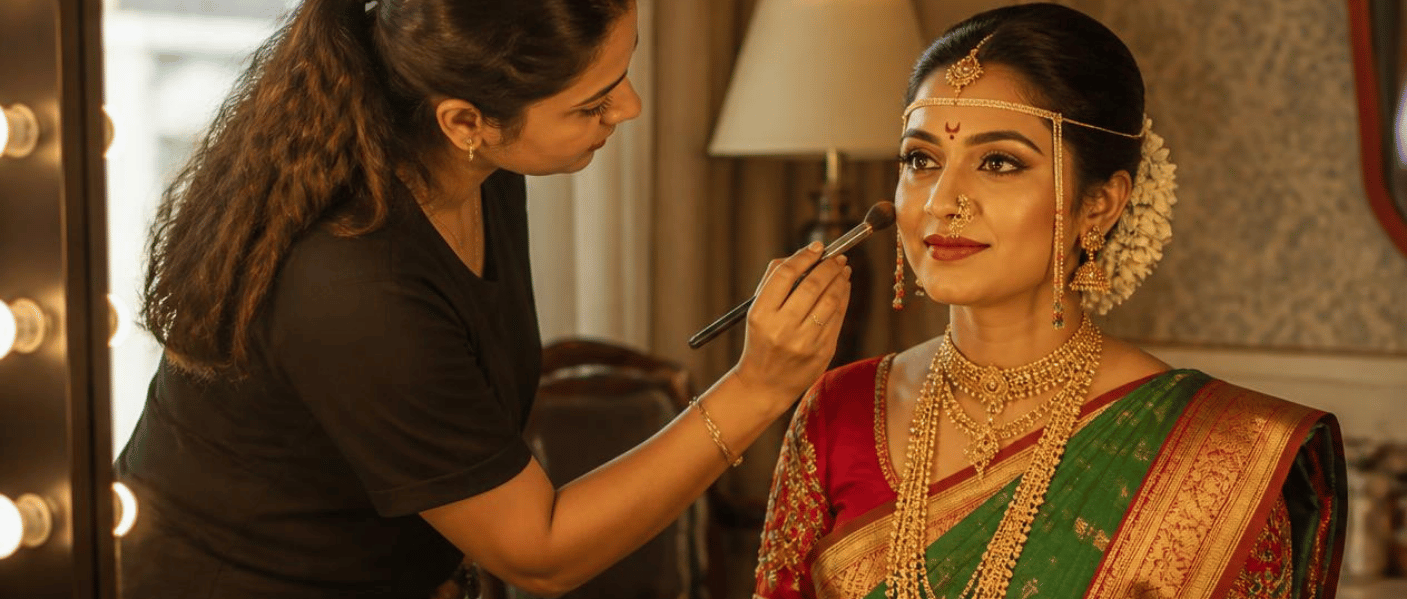
Your wedding day is one of the most photographed and memorable days of your life. From getting ready with your family to walking into the ceremony, exchanging vows, meeting guests and posing for portraits, there will be cameras around you for hours.
That is why bridal makeup should be planned well before the wedding morning.
A common mistake brides make is thinking about makeup only after the wedding date is approaching. By then, important decisions such as choosing a makeup artist, scheduling a trial, selecting a makeup style, preparing the skin and coordinating the look with the saree and jewellery can become stressful.
A simple bridal makeup checklist can make the entire process much easier.
Your bridal beauty plan should cover more than foundation and lipstick. You need to think about your skin, makeup technique, hairstyle, jewellery, saree, photography, wedding venue, weather, timing and touch-ups.
For Mumbai brides, additional factors such as heat, humidity, travel time and long wedding functions can also influence the final makeup plan.
If you’re having a traditional Maharashtrian wedding, you may also need to coordinate your makeup with a Nauvari or Paithani saree, Maharashtrian nath, mundavalya, chandrakor, green bangles, gold jewellery and traditional hairstyle.
The good news is that you don’t need to figure everything out on the wedding morning.
The best approach is to prepare gradually.
This complete bridal makeup checklist takes you through everything you should consider—from months before the wedding to the final makeup touch-up before you leave for the ceremony.
Save this guide, share it with your bridesmaids and use it as your bridal beauty planning checklist.
1. Start Planning Your Bridal Makeup Early
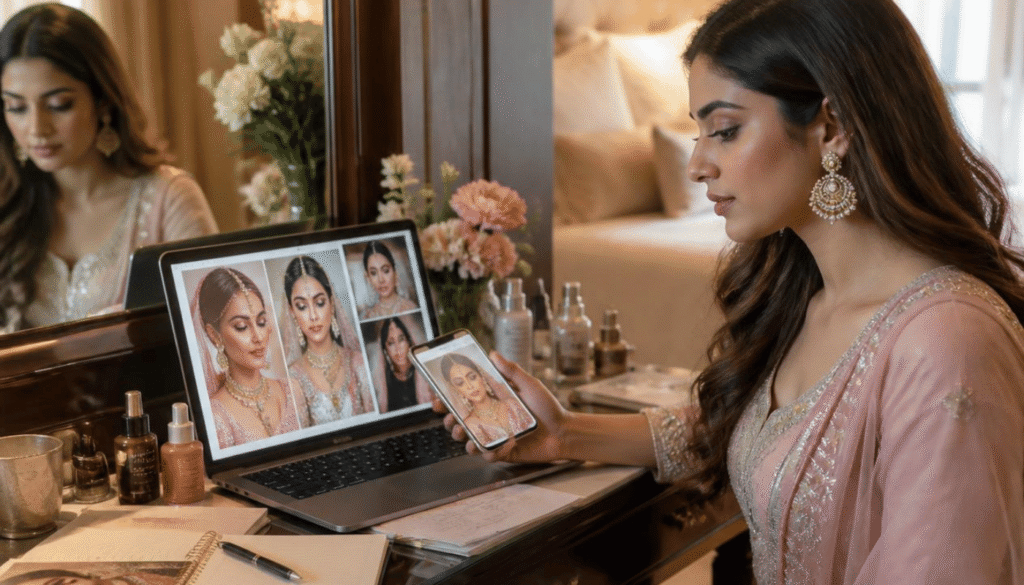
One of the first things you should do after finalising your wedding date is start researching bridal makeup artists. Popular artists can have multiple bookings during peak wedding seasons. Don’t wait until the final few weeks.
Start by looking at:
- Bridal portfolios
- Real bride photographs
- Makeup styles
- Reviews
- Packages
- Pricing
- Travel availability
- Trial options
- Hairstyling services
- Saree draping
- Touch-up services
Don’t choose an artist only because one photograph on Instagram looks beautiful. Look for consistency across multiple brides.
Bridal Makeup Artist Checklist
- Wedding date confirmed
- Makeup artist shortlisted
- Portfolio reviewed
- Real bride photos checked
- Reviews read
- Package compared
- Availability confirmed
- Booking completed
The earlier you book your makeup artist, the more choices you usually have.
2. Decide What Kind of Bridal Makeup You Want
Before booking your artist, understand the type of makeup you prefer.
Common choices include:
Natural Bridal Makeup
Soft, subtle and skin-focused.
HD Bridal Makeup
Refined, camera-friendly and customisable.
Airbrush Makeup
Lightweight application using an airbrush technique.
Soft Glam
More definition while maintaining an elegant finish.
Traditional Bridal Makeup
Stronger features designed around cultural styling.
Contemporary Bridal Makeup
Modern complexion, softer colours and current beauty trends. You don’t have to choose a final look immediately.
Save a few reference photographs and identify what you like about each.
For example:
“I like this bride’s skin.”
“I like these eyes.”
“I like this lipstick.”
“I prefer this level of contour.”
This is more useful than simply showing one photograph and asking your artist to copy it exactly.
The earlier you book your makeup artist, the more choices you usually have.
3. Create a Bridal Makeup Inspiration Folder
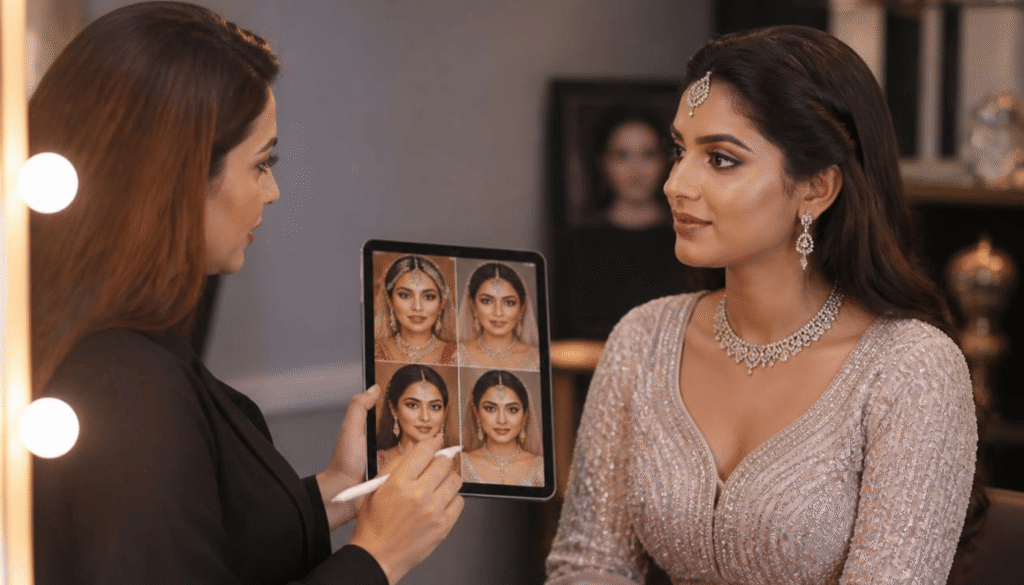
Create a folder on your phone or computer specifically for wedding beauty references.
You can include:
- Makeup references
- Hairstyle references
- Saree references
- Jewellery references
- Lip colours
- Eye makeup
- Bridal portraits
- Celebrity inspiration
But don’t save 100 completely different looks.
Choose approximately 5–10 strong references.
Then identify common elements.
For example:
Soft skin + bronze eyes + rose lips or Traditional kajal + red lip + sculpted skin
This gives your artist a clear direction.
Also remember that reference photographs can be affected by lighting, filters and editing.
The final look should be adapted to your own face and skin.
4. Schedule a Bridal Makeup Trial
A bridal trial is one of the most useful steps in your beauty preparation.
The trial allows you to test:
- Foundation shade
- Makeup finish
- Eye makeup
- Lip colour
- Blush
- Contour
- Lashes
- Hairstyle
- Overall balance
Don’t judge the makeup only by looking into the mirror. Take photographs.
Check the look in:
- Natural light
- Indoor light
- Close-up photography
- Full-length photography
- Flash photography if relevant
You should also wear or bring something similar to your wedding jewellery and outfit if possible.
This allows you to see the complete visual effect.
Bridal Trial Checklist
- Foundation tested
- Lip colour tested
- Eye makeup tested
- Lashes tested
- Blush tested
- Contour tested
- Hairstyle tested
- Photographs taken
- Lighting checked
- Final look approved
5. Prepare Your Skin Before the Wedding
Beautiful makeup begins with well-prepared skin.
Your goal isn’t necessarily to achieve “perfect skin.”
The goal is to maintain skin that feels:
- Clean
- Comfortable
- Hydrated
- Calm
- Well cared for
A basic routine may include:
Morning
Cleanser → Moisturiser → Sunscreen
Evening
Cleanser → Established skincare routine → Moisturiser
Don’t suddenly start using strong acids, unfamiliar treatments or viral DIY remedies because your wedding is approaching.
If you have persistent skin concerns, consult a qualified dermatologist or skincare professional early enough to discuss appropriate options.
6. Choose Your Foundation Finish
Foundation is one of the most important decisions in bridal makeup.
Your preferred finish may be:
Matte
More controlled and polished.
Satin
Balanced between matte and luminous.
Natural
Skin-like and subtle.
Dewy
More luminous and hydrated-looking.
Full Coverage
More complexion correction.
Medium Coverage
Balanced coverage with natural dimension.
For wedding photography, foundation should be carefully matched to your face and neck.
The finish should also suit your skin type and wedding environment.
For example, a Mumbai summer wedding may require a different approach from an air-conditioned evening reception.
Foundation Checklist
- Face and neck match
- Finish selected
- Coverage selected
- Photography tested
- Weather considered
7. Choose Your Eye Makeup Carefully
Your eyes are one of the most photographed parts of your face.
Think about:
- Kajal
- Eyeliner
- Eyeshadow
- Mascara
- False lashes
- Brow definition
- Inner-corner highlight
For traditional Maharashtrian bridal makeup, warm bronze, gold and brown tones can complement traditional jewellery beautifully.
For contemporary looks, soft taupe, rose, mauve and champagne can work well.
Your eye makeup should also suit your eye shape.
Don’t simply copy an eye look designed for a completely different eye structure.
8. Decide Your Bridal Lip Colour
Your lipstick should complement your entire bridal styling.
Popular choices include:
- Classic red
- Rose red
- Berry
- Brick
- Maroon
- Terracotta
- Peach
- Nude rose
- Mauve
Consider:
- Saree colour
- Jewellery
- Skin tone
- Wedding time
- Eye makeup
- Personal preference
If you’re wearing a traditional red bridal saree, you don’t necessarily need an identical red lipstick.
A contrasting rose or berry shade can sometimes create more dimension.
Lip Checklist
- Shade selected
- Lip liner tested
- Texture tested
- Photography checked
- Touch-up lipstick arranged
9. Plan Your Hairstyle With Your Makeup
Hair and makeup should be planned together.
Your hairstyle affects:
- Face framing
- Jewellery placement
- Nath visibility
- Mundavalya position
- Earrings
- Overall bridal silhouette
Traditional Maharashtrian brides often choose a bun decorated with jasmine or mogra.
Modern brides may choose:
- Low bun
- Textured bun
- Braided bun
- Soft waves
- Half-up hairstyle
If you’re wearing a mundavalya, make sure the hairstyle allows it to sit comfortably.
Hairstyle Checklist
- Hairstyle selected
- Trial completed
- Hair accessories ready
- Flowers arranged
- Mundavalya considered
- Hairpins prepared
10. Coordinate Makeup With Your Jewellery
Jewellery can dramatically change the appearance of your makeup.
For example, heavy gold jewellery can support:
- Bronze eyes
- Gold shimmer
- Warm blush
- Rich rose lips
Pearl-heavy jewellery may work beautifully with:
- Soft pink
- Champagne
- Mauve
- Cool rose
Traditional Maharashtrian jewellery creates its own visual identity.
If you’re wearing a large nath, thushi, tanmani, saaj, earrings and mundavalya, you may want the makeup to remain balanced.
The goal isn’t to make every element equally dramatic.
11. Plan Your Makeup Around the Saree
Your makeup should complement your bridal outfit.
For a Nauvari or Paithani saree, traditional makeup can create a beautifully cohesive appearance.
Consider the saree:
- Colour
- Border
- Fabric
- Jewellery
- Blouse
- Draping style
For example:
Green Paithani
Gold + bronze eyes with rose-red lips.
Red Nauvari
Defined kajal with warm blush and classic red lips.
Purple Paithani
Bronze eyes with berry or mauve lips.
Orange Nauvari
Terracotta and peach tones.
Don’t choose your makeup before knowing your final outfit.
12. Consider Your Wedding Venue and Weather
Your venue matters.
A wedding held in an air-conditioned hotel ballroom has different requirements from an outdoor ceremony.
Consider:
- Indoor vs outdoor
- Day vs night
- Temperature
- Humidity
- Travel time
- Wedding duration
- Photography schedule
Mumbai’s climate can make shine control and long-wear makeup particularly important during warm or humid conditions.
Tell your makeup artist exactly where the wedding will take place.
This helps them plan the makeup approach.
13. Plan Your Wedding-Day Makeup Schedule
Timing is extremely important.
Your makeup artist should know:
- Ceremony start time
- Photography start time
- Getting-ready deadline
- Travel time
- Hair time
- Saree draping time
- Jewellery time
Don’t calculate makeup time alone.
Your entire getting-ready process may include:
Skincare → Makeup → Hair → Saree Draping → Jewellery → Final Touch-Up → Photography
Add some buffer.
Unexpected delays are common on wedding days.
Wedding Morning Timeline Example
6:00 AM – Wake up / breakfast
6:30 AM – Skincare and preparation
7:00 AM – Makeup begins
8:30 AM – Hair styling
9:15 AM – Saree draping
9:45 AM – Jewellery and accessories
10:15 AM – Final makeup touch-up
10:30 AM – Bridal portraits
11:00 AM – Ceremony
Adjust the timeline according to your actual wedding schedule.
14. Prepare a Bridal Touch-Up Kit
Even excellent long-wear makeup may need small adjustments during a long wedding.
Ask your makeup artist what you should carry.
A basic kit may include:
- Lipstick
- Lip liner
- Compact/powder
- Blotting papers
- Cotton buds
- Tissues
- Makeup sponge if recommended
- Hair pins
- Safety pins
Your bridesmaid or trusted family member can keep the kit.
Avoid repeatedly adding powder without checking whether you actually need it.
15. Don't Try New Skincare or Makeup Before the Wedding
This deserves its own section because it is one of the easiest mistakes to avoid.
The final days before your wedding are not the right time to experiment.
Avoid suddenly introducing:
- New foundation
- New active skincare
- Strong exfoliation
- Unfamiliar facials
- Aggressive treatments
- Viral DIY skincare
- Unknown home remedies
Your wedding isn’t the time to find out whether a product agrees with your skin.
Stick to what you know.
If you want professional skincare treatment, plan it sufficiently in advance and discuss timing with a qualified skincare professional.
16. Prepare Your Skin the Night Before
The night before your wedding should be simple.
Don’t start an elaborate skincare experiment.
Focus on:
- Gentle cleansing
- Your established skincare routine
- Comfortable moisturisation
- Removing makeup completely
- Adequate sleep
If you’ve had a long day of pre-wedding events, take time to remove makeup properly.
Your skin deserves a break before the main wedding day.
Avoid aggressive scrubbing.
Avoid trying a new face mask.
Avoid sleeping with makeup.
17. What to Do on the Wedding Morning
The wedding morning can become chaotic.
Keep your routine organised.
Before the Makeup Artist Arrives
- Take a shower
- Eat a light, comfortable breakfast
- Drink water
- Complete your normal skincare
- Wear a button-down or front-opening outfit
- Keep your jewellery accessible
- Keep your makeup area clean
Avoid wearing a tight-necked outfit that needs to be pulled over your finished makeup and hairstyle.
A robe, shirt or front-opening outfit is much easier.
18. Eat Before Your Bridal Makeup
This is easy to forget.
You may be excited or nervous, but your wedding day will be long.
Have a comfortable meal before or during the getting-ready period.
Choose something you already know works well for you.
Avoid trying unfamiliar foods immediately before the ceremony.
Keep snacks and water available.
Your makeup artist may need you to remain still for extended periods, so eating beforehand can make the experience much more comfortable.
19. Keep Your Makeup Area Organised
Your makeup artist needs enough space.
Before they arrive:
- Clear the vanity
- Arrange a comfortable chair
- Provide good lighting
- Keep a mirror available
- Keep electrical outlets accessible
- Keep children away from cosmetics
- Keep food and drinks away from products
If multiple people are getting ready in the same room, designate one area for the makeup artist.
This can reduce distractions and delays.
20. Tell Your Makeup Artist About Your Skin
Don’t hide information from your makeup artist.
Tell them if you have:
- Sensitive areas
- Dry patches
- Oily T-zone
- Known product sensitivities
- Recent skincare changes
- Breakouts
- Areas that require more coverage
Also tell them what you dislike.
For example:
“I don’t like heavy foundation.”
“I don’t like very dark eyebrows.”
“I prefer natural lips.”
“I don’t usually wear false lashes.”
This helps the artist understand your comfort level.
If you have a medical or persistent dermatological concern, seek appropriate professional advice rather than relying solely on makeup to manage it.
21. Don't Over-Powder Your Face
Many brides worry about becoming oily during the wedding.
The solution isn’t always more powder.
Excessive powder can make the skin look flat or dry, particularly in close-up photographs.
Instead, makeup artists can use strategic powdering.
For example:
- T-zone controlled
- Cheeks left more luminous
- Under-eye area carefully set
- High points kept naturally radiant
The exact approach depends on your skin.
22. Make Sure Your Foundation Matches Your Neck
This is one of the most important bridal makeup checks.
Your face and neck should look visually consistent.
A foundation that is too light or too dark can become especially noticeable in:
- Close-up photographs
- Side profiles
- Outdoor photography
- Video
- Flash photography
Your artist should assess the shade under appropriate lighting.
Don’t choose foundation based solely on how it looks under one warm studio light.
23. Check Your Makeup From Different Angles
Your wedding photographer won’t photograph only your face straight-on.
You may be photographed:
- From the front
- From the side
- From above
- From below
- While walking
- While sitting
- During candid moments
This is why your makeup should look balanced from different angles.
Check:
- Foundation blending
- Contour
- Blush
- Highlight
- Eye makeup
- Lip colour
- Brows
Your bridal trial is the perfect time to do this.
24. Waterproof and Long-Wear Makeup Matters
Indian weddings can be emotional.
There may be:
- Tears
- Sweat
- Humidity
- Dancing
- Long ceremonies
- Outdoor photography
Ask your makeup artist about appropriate long-wear and waterproof products.
This can be especially important for:
- Kajal
- Eyeliner
- Mascara
- Foundation
- Lip colour
However, waterproof doesn’t mean indestructible.
A touch-up plan is still useful.
25. Bridal Makeup Checklist for Maharashtrian Brides
If you’re wearing a Nauvari or Paithani saree, use this additional checklist.
Makeup
- Traditional or modern bridal style selected
- Kajal/eye makeup finalised
- Lip colour selected
- Blush selected
- Foundation tested
Accessories
- Nath
- Mundavalya
- Chandrakor
- Thushi
- Tanmani
- Kolhapuri saaj
- Earrings
- Green bangles
- Vaaki/armlets if required
Hair
- Traditional bun selected
- Mogra/gajra arranged
- Hair accessories ready
Saree
- Nauvari/Paithani ready
- Blouse ready
- Draping confirmed
- Safety pins ready
Photography
- Close-up tested
- Side profile tested
- Jewellery photographed
- Full-length look tested
26. Bridal Makeup Checklist for Haldi and Mehendi
Your wedding makeup plan doesn’t have to be identical for every function.
Haldi
- Fresh complexion
- Lightweight makeup
- Peach blush
- Soft eye makeup
- Waterproof products
- Floral jewellery
Mehendi
- Soft glam
- Natural skin
- Defined eyes
- Comfortable lip colour
- Hairstyle that works with the outfit
Sangeet
- More dramatic eyes
- Bronze/gold tones
- Stronger contour
- Longer-lasting makeup
- Glamorous hairstyle
Wedding
- Complete bridal makeup
- Traditional jewellery
- Camera-ready complexion
- Long-wear products
Reception
- Modern glam
- Stronger eye makeup
- Contemporary lip colour
- Sculpted complexion
27. What to Keep in Your Bridal Emergency Kit
A bridal emergency kit can save you from unnecessary stress.
Include:
Makeup
- Lipstick
- Lip liner
- Compact
- Blotting papers
- Cotton buds
- Tissues
Hair
- Hair pins
- Bobby pins
- Small comb
- Hair ties
Clothing
- Safety pins
- Fashion tape if appropriate
- Small sewing kit
General
- Tissues
- Water
- Small snack
- Phone charger
28. Bridal Makeup Checklist: One Day Before
Use this quick checklist.
- Confirm makeup artist arrival time
- Confirm wedding venue
- Confirm getting-ready room
- Keep jewellery ready
- Keep saree ready
- Keep blouse ready
- Keep mundavalya ready
- Keep nath ready
- Keep flowers ready
- Prepare touch-up kit
- Charge phone
- Eat properly
Final Thoughts
Bridal makeup should never become a last-minute decision. The more you plan in advance, the less stressful your wedding morning is likely to feel. Start by choosing the right makeup artist. Then decide the overall look, schedule your trial, and prepare your skin. Coordinate your makeup with your saree, jewellery and hairstyle. Think about your wedding venue and weather, plan your timeline, prepare a touch-up kit, and on the wedding morning, keep things simple and organised.
For Maharashtrian brides, remember that the complete look is much more than makeup. The Nauvari or Paithani saree, nath, mundavalya, chandrakor, gold jewellery, green bangles and traditional hairstyle all contribute to the final appearance. Your makeup should bring these elements together.
Most importantly, don’t feel pressured to follow every bridal trend. Choose a look that feels like you. If you normally prefer natural makeup, you don’t have to become heavily made up just because you’re a bride. If you love glamorous makeup, embrace it. If you want a traditional Maharashtrian appearance, celebrate it. If you prefer a modern interpretation, make it your own.
Your wedding photographs should show you at your most confident—not a version of you that doesn’t feel comfortable.
The perfect bridal makeup checklist ultimately has one final item:
☑ Enjoy your wedding day.
Because after all the planning, the makeup, the jewellery, the photography and the celebrations, that’s what you’ll remember most.