
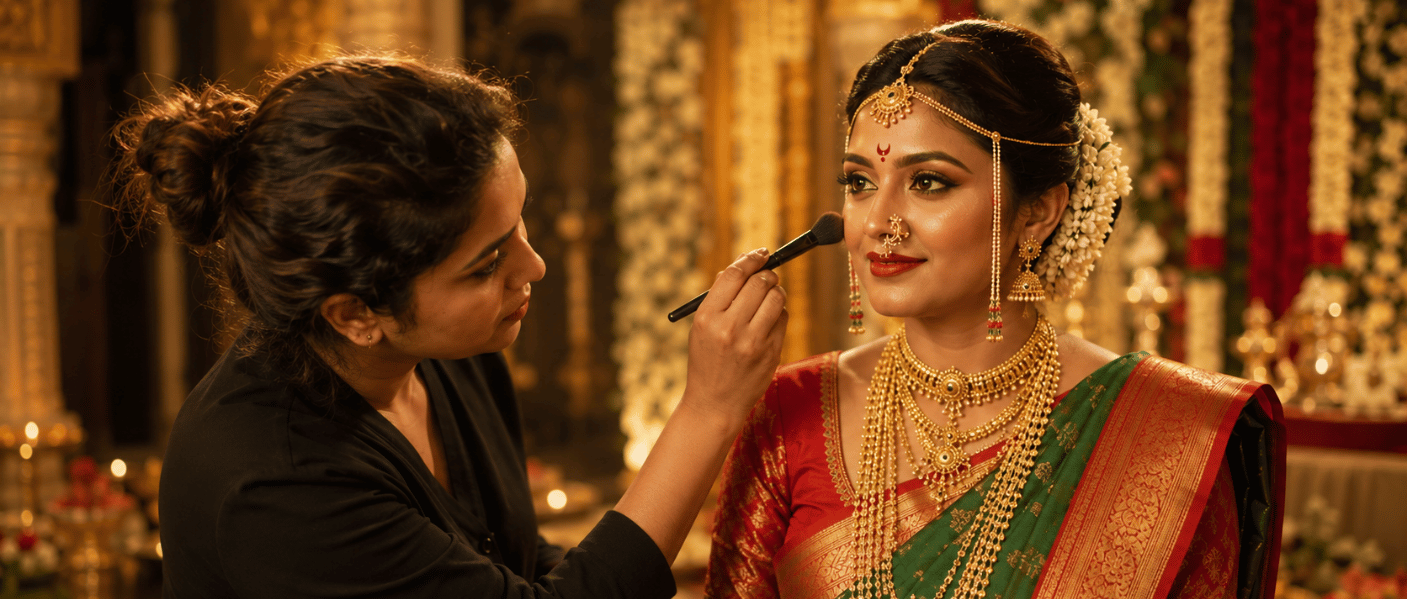
Every bride has unique facial features, and bridal makeup should be designed to complement those features rather than follow a one-size-fits-all formula.
The shape of your face can influence how makeup techniques such as contouring, highlighting, blush placement, eyebrow shaping and eye makeup appear. Understanding your face shape can help you communicate your preferences to your makeup artist and choose a bridal look that feels balanced and natural.
Common face shapes include oval, round, square, heart, oblong and diamond. Some people may also have a combination of characteristics rather than fitting perfectly into one category.
For Indian brides, facial structure is only one part of bridal makeup planning. Your skin tone, undertone, skin type, hairstyle, jewellery, saree, wedding ceremony, lighting and personal style also affect the final look.
This is particularly relevant for Maharashtrian brides wearing traditional styling. A Nauvari or Paithani saree, nath, mundavalya, chandrakor, gold jewellery and gajra hairstyle can create a strong visual frame around the face. Makeup should work with those elements rather than compete with them.
Contouring can be useful, but it should not be excessive. Modern bridal makeup generally focuses on enhancing natural structure rather than dramatically changing the shape of the face.
Similarly, blush placement can subtly influence how wide, lifted or elongated the face appears.
Your bridal trial is the best opportunity to experiment with these techniques.
Instead of asking your makeup artist to “make my face look smaller,” explain what you want to enhance.
Perhaps you want more definition around your cheekbones, softer-looking jawlines, lifted eyes or a more balanced overall appearance.
The right makeup can help create that effect while keeping your features recognisably yours.
This guide explains how to identify common face shapes and how bridal makeup techniques can be adapted for each one, including practical tips for Indian and Maharashtrian brides.
1. How to Identify Your Face Shape
Before changing your makeup, identify your general face shape.
Stand in front of a mirror with your hair pulled away from your face.
Look at:
- Forehead width
- Cheekbone width
- Jawline width
- Face length
- Chin shape
You may have characteristics of more than one face shape.
That’s completely normal.
Oval
Face is generally longer than it is wide, with balanced proportions.
Round
Face length and width are relatively similar, with softer jawlines.
Square
Forehead, cheekbones and jawline may appear similarly wide, with a stronger jaw.
Heart
Forehead may appear wider, while the chin is narrower.
Oblong
Face is noticeably longer than it is wide.
Diamond
Cheekbones are prominent, with a narrower forehead and jawline.
Your makeup artist can also help you determine which techniques suit your features.
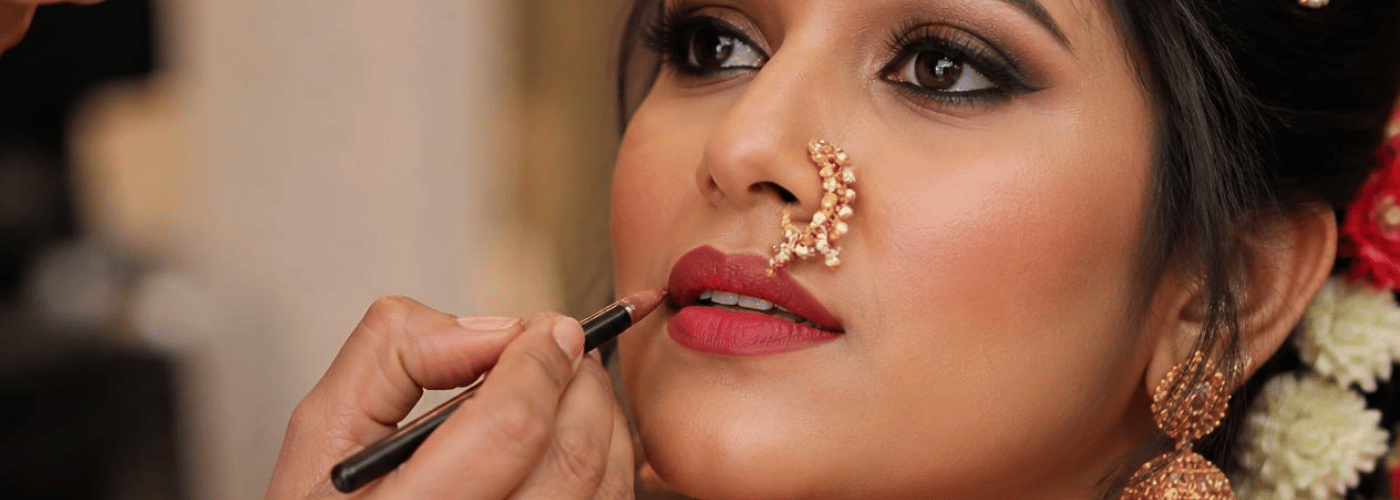
2. Bridal Makeup for an Oval Face
Oval faces are generally well balanced, with the face slightly longer than it is wide.
Because the proportions are naturally balanced, the goal is usually enhancement rather than significant correction.
You can focus on:
- Soft contouring
- Natural blush
- Balanced brows
- Defined eyes
- Strategic highlighting
Blush can be applied along the cheekbones and blended upward.
Contour should remain subtle.
The beauty of an oval face is its versatility.
You can experiment with:
- Natural makeup
- Soft glam
- Traditional bridal makeup
- Dramatic eyes
- Bold lips
Your hairstyle can also be varied depending on your outfit and jewellery.
3. Bridal Makeup for a Round Face
Round faces generally have softer angles and a relatively similar width and length.
Makeup can create subtle definition while preserving the natural softness of the face.
Your artist may focus on:
- Light contour along the sides of the face
- Blush placed slightly higher on the cheeks
- Vertical eye makeup
- Defined brows
- Strategic highlighting
Avoid overly strong horizontal blush placement if you want the face to appear more elongated.
A soft lifted blush direction can create a more sculpted appearance.
However, contour should remain natural.
4. Bridal Makeup for a Square Face
Square faces often have a more defined jawline and stronger facial angles.
The makeup goal can be to maintain that beautiful structure while creating soft transitions.
Your artist may use:
- Soft contour around the outer jaw
- Blended bronzer
- Rounded blush placement
- Soft eye makeup
- Gentle highlighting
Avoid overly harsh contour lines.
Blending is particularly important.
You want dimension rather than visible makeup stripes.
A soft glam look can work beautifully with this face shape.
5. Bridal Makeup for a Heart-Shaped Face
A heart-shaped face generally has a wider forehead and narrower chin.
The goal can be to create visual balance between the upper and lower portions of the face.
Your makeup artist may focus on:
- Soft forehead contour
- Blush toward the centre of cheeks
- Defined eyes
- Balanced lip colour
- Gentle chin highlighting
Avoid making the forehead contour too obvious.
The overall effect should remain soft and seamless.
A bold lip can also add beautiful visual balance.
6. Bridal Makeup for an Oblong Face
Oblong faces are generally longer than they are wide.
The makeup strategy can focus on creating visual balance without making the face appear longer.
Blush can be placed more horizontally across the cheeks rather than strongly angled upward.
Your artist may also use:
- Soft contour around the forehead
- Gentle chin contour
- Fuller-looking blush placement
- Horizontal eye emphasis
Hairstyle can also play an important role.
Soft volume around the sides of the face can create balance.
7. Bridal Makeup for a Diamond Face
Diamond-shaped faces typically have prominent cheekbones with a narrower forehead and jaw.
Instead of hiding the cheekbones, makeup can enhance their natural structure.
Your artist may focus on:
- Soft blush across cheekbones
- Minimal cheek contour
- Gentle forehead highlight
- Balanced jawline definition
- Defined eyes
Because the cheekbones are naturally prominent, excessive contour may not be necessary.
A luminous cheekbone can become one of the strongest features of the bridal look.
8. Contouring Should Be Subtle and Strategic
Contouring can enhance facial structure.
But bridal makeup does not require dramatic contour lines.
A professional artist can use subtle shading around areas such as:
- Cheekbones
- Jawline
- Temples
- Nose
The goal is to create natural-looking dimension.
Strong contour may look different under different lighting conditions.
It can also become more noticeable in close-up photographs.
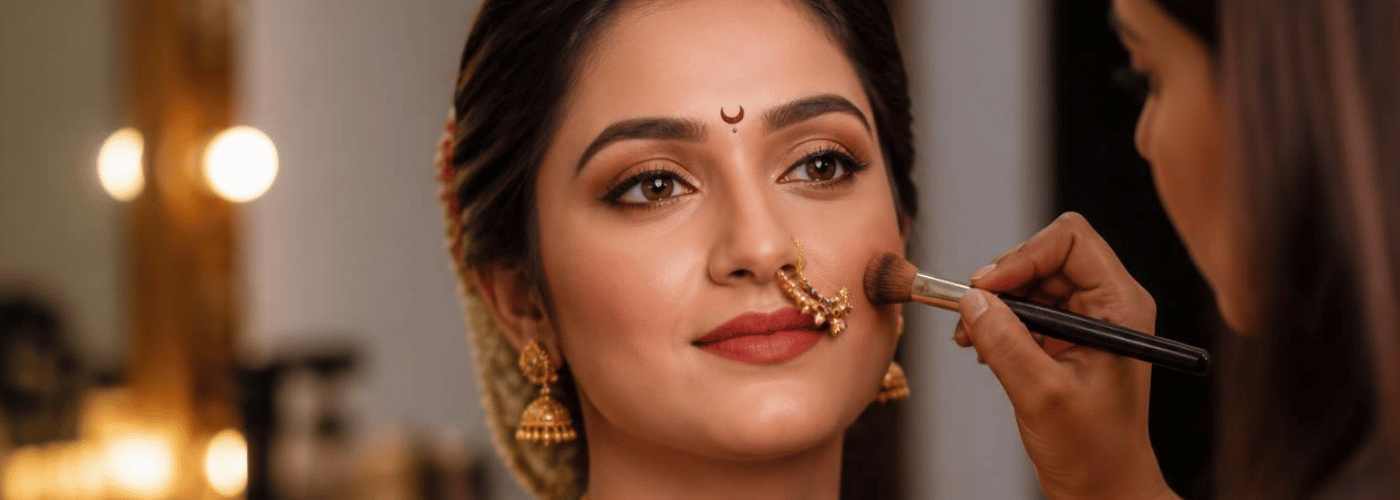
9. Blush Placement Can Change the Overall Appearance
Blush is more than adding colour.
Its placement can influence how the face appears.
For a round face
Higher, lifted placement can create a more elongated effect.
For an oblong face
Slightly wider placement can add visual balance.
For a square face
Soft rounded blending can soften the overall appearance.
For an oval face
Most balanced blush placements can work well.
The final colour should complement your skin tone and bridal outfit.
Popular Indian bridal shades include:
- Terracotta
- Rose
- Peach
- Berry
- Brick
- Warm coral
10. Eye Makeup for Different Face Structures
Eye makeup can influence the overall balance of the face.
Your artist can consider:
- Eye shape
- Eye spacing
- Brow structure
- Face length
- Bridal style
For example, elongated eyeliner can create a different visual effect from rounded eye makeup.
Popular bridal options include:
Traditional
Defined kajal + black eyeliner + warm gold eyeshadow.
Soft Glam
Bronze eyes + soft liner + wispy lashes.
Natural
Brown liner + soft neutral eyeshadow + natural lashes.
Your eye makeup should complement the face rather than follow a fixed trend.
Common Bridal Makeup Mistakes Related to Face Shape
Over-Contouring
More contour doesn’t necessarily mean better definition.
Using the Same Blush Placement for Everyone
Blush can be customised according to facial structure.
Ignoring Hairstyle
Hair and makeup should work together.
Following Social Media Trends Blindly
A technique that works for one face may not suit another.
Changing Your Natural Brow Shape Too Much
Your brows should still look like you.
Overusing Highlighter
Excessive highlight can draw attention to areas you may not want emphasised.
Ignoring Jewellery
Traditional jewellery changes the visual frame of your face.
Skipping the Trial
Face-shape techniques should ideally be tested before the wedding.
Final Thoughts
Your face shape can provide useful guidance when planning bridal makeup, but it shouldn’t become a limitation. Every face is different, and oval, round, square, heart, oblong and diamond-shaped faces can all look stunning with bridal makeup when the techniques are adapted thoughtfully.
Contouring can add subtle structure, while blush can create balance and highlighter can bring forward selected features. Eye makeup can enhance the eyes, lip colour can add definition, and the right hairstyle can complete the overall visual frame.
For Maharashtrian brides, traditional elements such as the nath, mundavalya, chandrakor, Paithani or Nauvari saree, gold jewellery and jasmine gajra should also be considered when designing the final bridal look. These elements work together with the makeup, hairstyle and facial features to create a harmonious appearance.
Don’t try to completely change your facial structure. Instead, focus on enhancing the features you already love. Your bridal makeup should still look like you—from the mirror to the wedding album.
The most important step is the bridal trial. Use it as an opportunity to experiment with different blush placements, contour intensity and lip colours. Take photographs in different lighting and try the hairstyle with your jewellery to see how everything works together.
Most importantly, communicate honestly with your makeup artist about what you like and what you don’t. Face-shape guides are helpful starting points, but there is no universal formula for beauty.
The perfect bridal makeup look is the one that complements your features, matches your personal style and makes you feel confident when you walk into your wedding ceremony.
Looking for Bridal Makeup in Mumbai?
If you’re searching for bridal makeup in Mumbai and want a personalised look based on your facial features, skin tone, outfit and jewellery, Shades of Beauty by Asmita can help you plan your bridal makeup and styling.
Whether you prefer natural bridal makeup, soft glam, HD makeup, airbrush makeup or traditional Maharashtrian bridal makeup, discuss your preferred look during your consultation and trial.
Your face doesn’t need to fit a beauty formula.
The right makeup simply helps your natural features shine.