
Introduction
Your wedding day is one of the most photographed days of your life, and preparing your skin in advance can help you feel confident when you sit in the makeup chair. A consistent skincare routine can support your skin barrier, improve hydration and help create a comfortable base for bridal makeup. However, beautiful bridal makeup does not require perfectly clear or poreless skin. The goal is healthy, comfortable skin and a makeup look that complements your natural features.
Following a Pre-Wedding Skincare Guide for 30 days before your wedding can help you establish a simple routine, identify products that suit your skin and avoid unnecessary last-minute experimentation. Whether your skin is oily, dry, combination or sensitive, a thoughtful approach to cleansing, moisturizing and sun protection can make your preparation more manageable.
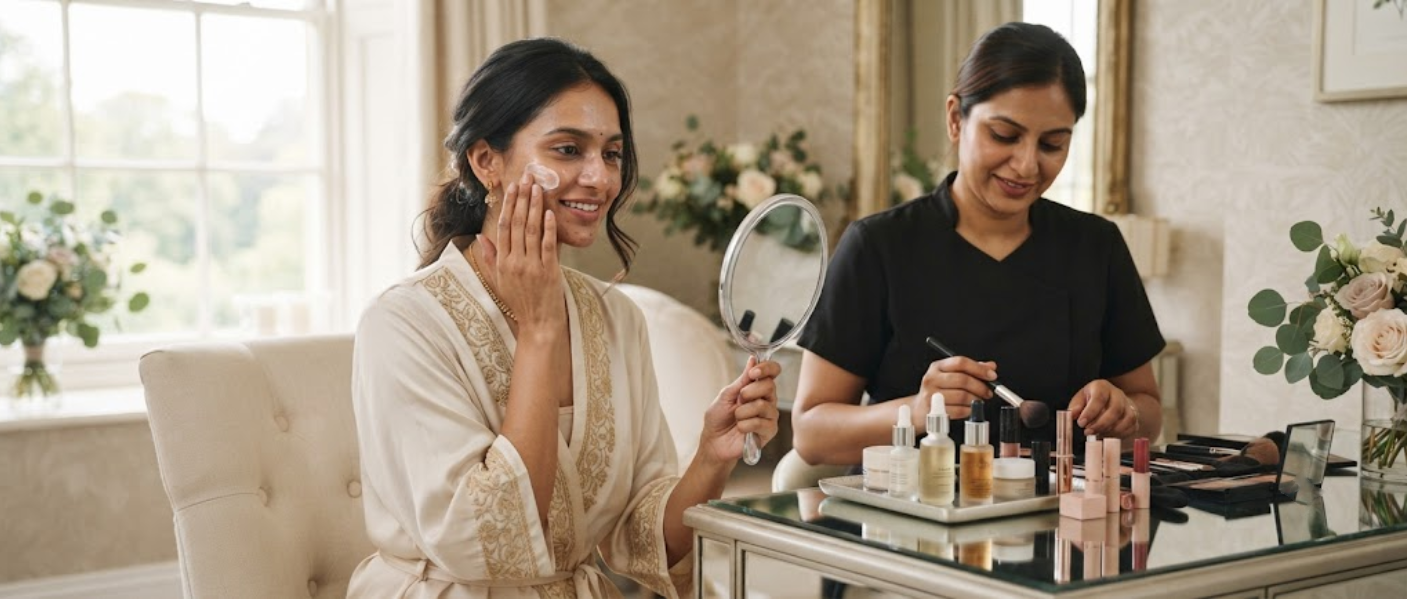
At Shades of Beauty by Asmita, bridal makeup planning involves considering the bride’s preferences, skin type and desired finish. Preparing your skin before the appointment can support a smoother makeup application, while the right makeup technique and products help create the final bridal look.
1. Why Is Pre-Wedding Skincare Important Before Bridal Makeup?
Pre-wedding skincare is about maintaining your skin’s comfort and condition before the wedding, rather than trying to transform it overnight. Bridal makeup products sit on the skin, so dryness, flaking or irritation may affect how foundation and other products look and feel.
A consistent routine can help keep the skin hydrated and support its natural protective barrier. When your skin feels comfortable, makeup application may be easier to customize, especially if you have areas of dryness, excess oil or sensitivity.
It is also important to set realistic expectations. Skincare cannot guarantee that every blemish, mark, pore or uneven area will disappear within 30 days. Some concerns require more time or professional treatment, and your makeup artist can adapt the coverage and finish to your individual needs.
The most useful preparation is often simple: use products your skin already tolerates, avoid unnecessary irritation and give yourself enough time to identify any problems before the wedding.
2. Understand Your Skin Type Before Starting a Bridal Skincare Routine
Before choosing products, take time to understand how your skin usually behaves. A product that feels comfortable on dry skin may be too heavy for oily skin, while strongly fragranced products may not suit sensitive skin.
Skin type can also change with weather, stress, travel and environmental conditions. You do not need a complicated routine or a large collection of products to prepare for bridal makeup. Start with the basics and make changes only when necessary.
Common skin types and their needs
Oily skin: Skin may become shiny throughout the day, especially around the forehead, nose and chin. A lightweight moisturizer and gentle cleanser may help maintain comfort without leaving a heavy finish.
Dry skin: Skin may feel tight, rough or flaky. A gentle cleanser and a moisturizer suited to your skin can help reduce dryness and support the skin barrier.
Combination skin: Some areas may be oily while the cheeks feel normal or dry. You may need to adjust the amount or texture of moisturizer across different areas.
Sensitive skin: Skin may react to fragrances, exfoliants or new products. A simpler routine with products you already tolerate is often a sensible approach.
Normal skin: Skin may feel relatively balanced but still benefit from regular cleansing, moisturizing and sun protection.
If you are unsure about your skin type or have a persistent skin concern, consider consulting a qualified dermatologist rather than experimenting with multiple treatments before the wedding.
Image Prompt: Premium photorealistic beauty editorial featuring an Indian bride-to-be examining her skin in a mirror, with a few simple skincare products on a vanity, realistic pores and natural skin texture, soft daylight, elegant neutral surroundings, authentic skin appearance, no text, no logo, no watermark.
3. Your 30-Day Pre-Wedding Skincare Timeline
The month before your wedding is a good time to focus on consistency instead of making dramatic changes. If you already have a routine that suits your skin, continue using it rather than replacing everything with unfamiliar products.
Days 30–22: Establish Your Routine
Focus on gentle cleansing, moisturizing and daily sunscreen. Review the products you currently use and avoid introducing several new products together. If you have a known skin concern, consider arranging a professional consultation early enough to receive appropriate guidance.
Days 21–15: Maintain Consistency
Continue the routine and observe how your skin responds. Pay attention to unusual dryness, redness, breakouts or discomfort. This is the time to simplify your routine if something appears irritating, rather than adding more products in an attempt to correct it quickly.
Days 14–8: Keep Your Skin Comfortable
Prioritize hydration and sun protection. Avoid experimenting with strong exfoliants, peels or unfamiliar facials. If you are considering a professional skin treatment, consult a qualified provider about its risks, recovery time and suitability before proceeding.
Days 7–1: Keep Things Simple
Use familiar products and avoid unnecessary treatments. Do not squeeze pimples or pick at dry areas. Maintain normal sleep, hydration and meal routines as far as possible, and inform your makeup artist about any skin sensitivity or changes.
This timeline is a planning guide, not a guarantee of specific skin results. Your skin’s response will depend on its condition, your existing routine and individual factors.
4. Morning Skincare Routine Before Bridal Makeup
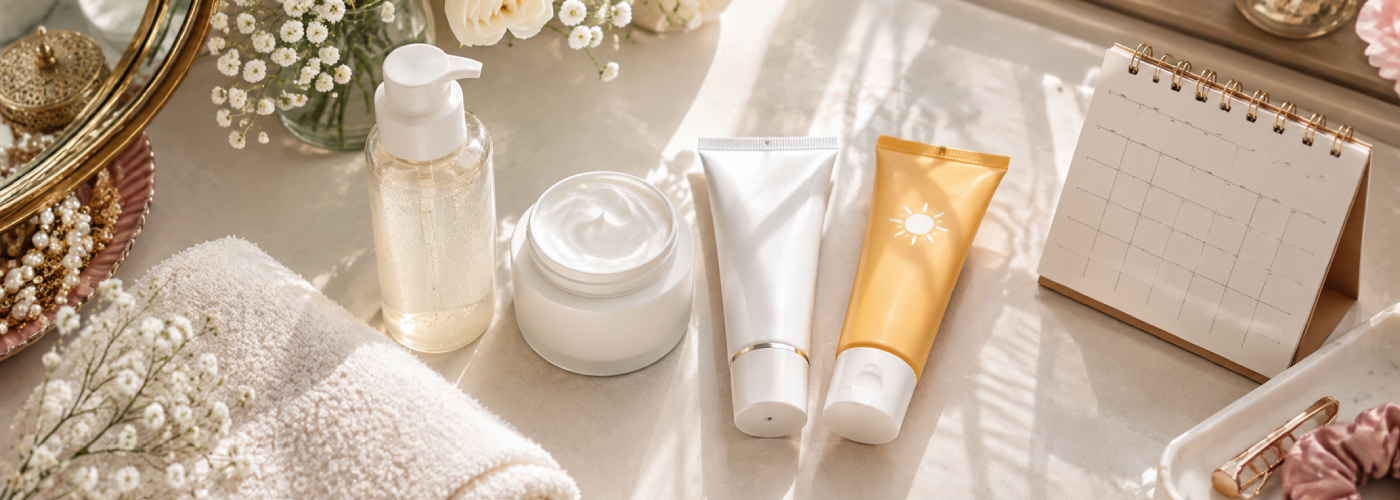
A morning skincare routine helps remove overnight residue, replenish moisture and protect the skin during the day. You do not need multiple serums or complicated layers to prepare your face for bridal makeup.
Begin with a gentle cleanser that suits your skin. If your skin is very dry or sensitive, you may prefer a mild cleansing approach that does not leave it feeling tight. Avoid using very hot water or scrubbing the skin aggressively.
Apply moisturizer according to your skin’s needs. Allow it to settle before applying sunscreen, and give sunscreen the time recommended on its packaging before layering makeup. The amount and type of sunscreen should suit your skin and provide broad-spectrum protection.
Four essential steps for your morning routine
- Step 1: Gentle cleansing. Clean your skin without harsh scrubbing or a strong stripping sensation.
- Step 2: Moisturizing. Use a product that helps your skin feel comfortable and hydrated.
- Step 3: Sunscreen. Apply broad-spectrum SPF 30 or higher as directed on the product label, and reapply as recommended, especially outdoors.
- Step 4: Allow products to settle. Give skincare layers time to absorb before applying makeup or other products.
Consistency matters more than the number of products. If your current routine works well, there is usually no need to add extra steps simply because the wedding is approaching.
5. Nighttime Skincare Routine for the Month Before Your Wedding
Your nighttime routine is an opportunity to remove sunscreen, makeup and everyday buildup while keeping your skin comfortable. A consistent evening routine can also help you avoid going to bed with heavy makeup or products that may irritate your skin.
Start by removing makeup and sunscreen thoroughly using products suited to your skin. If you wear long-wear makeup, choose a suitable remover and avoid rubbing the delicate eye area. Follow with a gentle cleanser when needed.
Next, apply moisturizer. Dry skin may prefer a richer texture, while oily skin may feel more comfortable with a lightweight formula. The right product is one that your skin tolerates well and that does not cause discomfort.
If you already use an active skincare ingredient recommended for your skin, ask your dermatologist whether it is appropriate to continue before the wedding. Do not start strong retinoids, exfoliating acids or other potentially irritating treatments simply to achieve faster results during the final month.
Your nighttime routine should feel calming and manageable. The aim is to maintain skin comfort and avoid unnecessary irritation, not to force rapid changes just before a major event.
6. How to Keep Your Skin Hydrated Before Bridal Makeup
Hydration is an important part of skin preparation because dehydrated skin may feel tight, look dull or show dry patches. Moisturizing can help reduce discomfort and support the skin’s natural barrier, making it easier for your makeup artist to choose a suitable base.
Hydration does not mean applying as many products as possible. Too many layers can feel uncomfortable or may not suit your skin. Instead, choose a moisturizer that works with your skin type and use it consistently.
Dry skin may benefit from a cream with ingredients that help attract and retain moisture. Oily skin can also need moisturizer, although a lighter texture may feel more comfortable. If a product causes burning, itching or persistent redness, stop using it and seek appropriate advice if symptoms continue.
Drinking water regularly supports general health, but drinking excessive amounts will not instantly remove blemishes or make skin flawless. A balanced routine, adequate rest and appropriate skincare are more realistic ways to prepare for your wedding.
On the wedding day, tell your makeup artist if your skin feels unusually dry or tight. They can adjust skin preparation and makeup products according to your needs.
7. Managing Pimples, Acne and Breakouts Before the Wedding
Breakouts can be frustrating when your wedding is approaching, but aggressive treatments may make the skin more irritated. The safest approach depends on the type and severity of the breakout, your existing skincare routine and whether you have a history of acne.
Avoid squeezing pimples or repeatedly touching your face. Picking at blemishes can increase inflammation and may contribute to scarring or marks. Use gentle skincare and avoid layering several spot treatments unless a qualified professional has advised you to do so.
If you experience painful, persistent or widespread acne, consult a dermatologist as early as possible. Some acne treatments take time to work and may initially cause irritation, so treatment choices should be made with the wedding date in mind.
Do not use toothpaste, harsh scrubs, lemon juice or unverified home remedies on active breakouts. These approaches can irritate the skin and may make the situation worse.
Remember that a pimple does not have to ruin your bridal look. A skilled makeup artist can adapt product placement, coverage and blending to help conceal the appearance of a blemish without requiring you to damage your skin beforehand.

8. Exfoliation, Facials and Professional Skin Treatments Before the Wedding
Exfoliation and facials are often included in pre-wedding beauty plans, but more treatment does not necessarily mean better results. Some treatments can cause redness, dryness, irritation or temporary breakouts, particularly when they are unfamiliar or unsuitable for your skin.
If you already use a gentle exfoliating product without problems, ask a dermatologist or skincare professional whether it makes sense to continue it as the wedding approaches. Avoid beginning strong chemical peels, aggressive exfoliation or intensive treatments in the final days without professional guidance.
Facials also vary widely. A gentle treatment that your skin has tolerated before may be different from a deep extraction or an unfamiliar treatment. Consider your skin’s sensitivity, your previous experience and the recovery period before scheduling anything.
If you are planning a professional treatment, arrange it well in advance and discuss the wedding date with the provider. Do not assume that every facial is suitable for every skin type or that a treatment will produce immediate, predictable results.
For the final week, a simple and familiar routine is often preferable to experimenting with new treatments. Protecting your skin from irritation is more useful than taking unnecessary risks in pursuit of an instant glow.
9. Sunscreen, Sleep and Daily Habits for Bridal Skin Preparation
Skincare products are only one part of pre-wedding preparation. Daily habits, sun exposure and sleep can also affect how comfortable and rested you feel during the wedding period.
Use broad-spectrum sunscreen consistently, particularly if you spend time outdoors. Sun protection can help reduce the effects of ultraviolet exposure, including sunburn and long-term skin damage. Reapply according to the product instructions and your exposure to sunlight.
Try to maintain a regular sleep schedule, especially during the final week. Wedding planning can involve late nights and travel, but adequate rest can help you feel more refreshed and prepared for the day.
Eat regular, balanced meals and drink water according to your needs. You do not need to follow a restrictive diet, detox plan or extreme beauty routine to prepare for bridal makeup. Avoid making major dietary changes solely for a quick skin result.
Four everyday habits to prioritize
- Sun protection: Use suitable sunscreen and protective clothing when needed.
- Consistent sleep: Keep a realistic sleep schedule instead of relying on last-minute recovery.
- Balanced meals and hydration: Maintain regular meals and drink water throughout the day.
- Stress management: Make time for rest, light activity or relaxing routines that fit your lifestyle.
These habits support general well-being, but they cannot guarantee blemish-free skin. Keep expectations realistic and focus on feeling comfortable and confident.
10. Skincare Mistakes to Avoid in the Final Week Before Your Wedding
The final week is not the ideal time to experiment with a completely new skincare routine. A product that works well for someone else may not suit your skin, and even familiar ingredients can cause problems if used incorrectly or too frequently.
Avoid harsh scrubbing, squeezing pimples and applying multiple strong treatments in an attempt to make your skin look better overnight. These habits may leave the skin irritated or uncomfortable just before makeup application.
Be cautious with unfamiliar facials, peels, waxing or other treatments close to the wedding. Timing and suitability depend on the procedure and your skin, so ask a qualified professional about potential reactions and recovery time.
You should also avoid comparing your skin with heavily edited photographs or expecting every pore and mark to disappear. Real skin has texture, and professional makeup is designed to work with natural features rather than erase every sign of them.
If you notice a new rash, significant swelling, persistent burning or another concerning reaction, stop using the suspected product and seek appropriate medical advice. Do not try to cover an unexplained reaction with additional products.
Conclusion: Follow a Simple Pre-Wedding Skincare Guide for Bridal Makeup
Preparing your skin before bridal makeup does not require an expensive collection of products or a dramatic last-minute treatment. A consistent Pre-Wedding Skincare Guide built around gentle cleansing, suitable moisturizing, sun protection and familiar products can help you maintain skin comfort during the month before your wedding.
Use the 30-day period to understand your skin, maintain habits that work for you and address persistent concerns with a qualified professional. Avoid picking at blemishes, introducing strong treatments at the last minute or expecting skincare to eliminate every mark and pore.
On the wedding day, communicate with your makeup artist about your skin type, sensitivities and desired finish. With appropriate preparation and a customized makeup approach, you can create a beautiful bridal look that complements your natural features.
For brides preparing for their wedding in Mumbai, Shades of Beauty by Asmita can help you discuss your bridal makeup preferences and plan a look that suits your outfit, style and special day.